
Why, When, and How to Have Conversations That Help
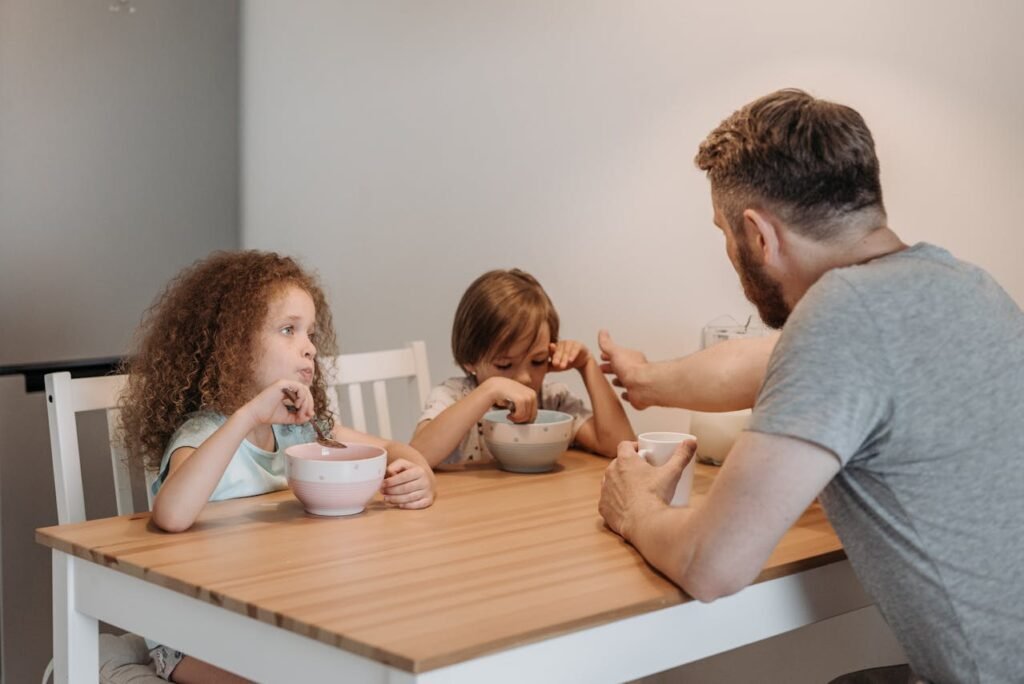
Anything that’s human is mentionable, and anything that is mentionable can be more manageable. When we can talk about our feelings, they become less overwhelming, less upsetting, and less scary. The people we trust with that important talk can help us know that we are not alone.
― Fred Rogers
In times like these, when hard things are happening in our community, our country, and in the larger world, we know it is our responsibility to communicate with our children. But it’s hard. Hard to find the right time. Hard to find the right words. Hard to know how much to share. Here are some thoughts I hope are helpful.
I am going to focus the conversation around big events. These might include…
- Family events such as death, serious illness or injury, divorce
- Community events such as natural disasters, community violence, protests and other signs of civil unrest
- National or world events such as natural disaster, war, political unrest
Why have these conversations? Why is it important to talk with children about big events?
- Minimizes isolation
- Alleviates anxiety
- Allows child to process events so they are not all-consuming
- Supports healthy parent/child relationships
- Establishes you as an authority who can be trusted in hard times
- Gives you the opportunity to correct misinformation
- Allows you to share your values with your child at critical times
When should you have these conversations?
Here are some signs a conversation is needed:
- When the child asks. This does not mean you have to have the conversation right then. It is okay to say, “let me think about the best way to answer that.” Or “this isn’t the right place for that conversation, let’s talk about it when we get home.”
- When you notice the impact of events on the child. This might look like moodiness, increased anxiety, goofy or disruptive behavior.
- When an event disrupts daily life.
- When a child has witnessed something upsetting.
- When big changes are coming for the child or family.
How to have the conversation.
The ‘how’ will be greatly impacted by the child’s age and developmental stage. Here are some guidelines I hope are helpful.
For All Ages
Talk with another adult before talking with your child. It’s okay to let your child know you are upset, sad or scared. But the child should not be so overwhelmed by your feelings that it increases their anxiety. Sometimes things will take us by surprise, and the child will be there for the raw reactions. But when possible, take the opportunity to talk, cry, yell, or shake with other adults before attempting to talk with your child.
Use real words. Sometimes parents want to make things less scary by not using words that trigger us, like cancer, or death. But when we substitute other words, we end up making those words scary and the world as a whole feel less safe.
Offer reassurances where you can. Point out the helpers. Help the child ‘right size’ the impact of the event on their own life. Help the child notice what is not going to change.
Help the child locate other adults they can talk to. These might include family friends, religious leaders, teachers, older relatives.
Infants and Toddlers (0-3)
Children at this age live in very small worlds. They know only what they experience directly. Vocabulary is limited. At this age, you are teaching the child the words for these events more than you are using the words to explain the event.
Family matters: Use simple expressive phrases. “The car crashed. Daddy got hurt. The ambulance came. It made a lot of noise! Ahhhh-ahhhh-ahhhhh. “Nana died. We won’t see her again. We are so sad.”
Community events: Give explanation for things the child is experiencing directly. “A fire far away is making a lot of smoke. We need to stay inside so we don’t keep getting smoke in our noses.”
National and World events: The child is not likely to understand overheard conversation enough for it to be upsetting. What could be upsetting to your child is your distraction and upset. Keep explanations simple and concrete. “Some people far away are having a big fight. It is making Mommy sad.” Media images can be very disturbing to children this young. Limit exposure to 0 if possible.
Preschool and early Elementary (4-8)
A preschooler’s world is still very small, but their imaginations are enormous. There’s limited (if any) understanding of difference between real and imaginary, what can and cannot happen. Their vocabulary is still fairly small and concrete. Even is a child is familiar with words like “death,” “cancer,” or “war,” this may be the first time they have experiences that go with those words.
Family matters: When tragedy strikes in a family, it is hard to balance overwhelming a child with information verses withholding information the child needs. Offer simple, honest explanations. Don’t be afraid to say you don’t know when you don’t know. Check for understanding. Be prepared to have multiple conversations as the situation evolves and the child’s understanding along with it.
Community events: Again, offer simple honest explanations about what is happening. It is often best to start these conversations by asking what the child already knows about the situation. What did the child see or hear? What have they already been told or overheard?
Be clear about how the event will or will not impact your family. If there is potential danger, let the child be part of creating and rehearsing the safety plan. When a child sees others in distress, invite them to be one of the helpers. Ask yourself: How can your family respond to the community’s needs? How can your child be part of it?
National and World events: Keep media images of violence and destruction away from young children as much as possible. They do not understand how large the world is. Things happening halfway around the world will feel immediate and frightening. Video on replay will look like multiple events.
Again, invite the child to be a helper. Share how your family is responding to an evolving situation and how they can be part of it.
All big events: At this age, children process many events through their play. Make sure your child has time for uninterrupted free play and plenty of props. Stay nearby as a witness if that works for you and your child. Avoid asking questions or inserting your own ideas. Notice if there are misperceptions you can help clarify in a future conversation.
Upper Elementary and Middle School Age (8-14)
By this age, a child’s world has expanded quite a bit. Their brains have increased capacity for abstract thought. They have more experience to draw on. The words you use are more likely to already have meaning for the child.
Family matters: Start by acknowledging what the child may have already witnessed. “You may have noticed…”. Provide the information the child needs. Invite the child to ask more questions. Again, be prepared for multiple conversations. They may act disinterested at first. Often, this is a sign of overwhelm. Let your child know you will keep them informed as the situation changes. Be clear they can ask you when they are ready for more information.
Community, National and World events: Again, start by asking your child what they have heard or already know about the event. This will help you tailor your remarks to what the child is ready to understand. It also gives you the opportunity to clear up misconceptions the child may have.
Give your child the opportunity to be a helper both in the family and beyond. Ask for their ideas about how your family can respond to evolving events. This is an important time to let your children see how you live into your values.
At this age, you have less control over what media your child is exposed to outside of your home. At the same time, children have a greater capacity to understand time and distance and keep things in proportion. Watching news with them could be helpful. It will allow you to share your perspective and creates more opportunity for conversation. Do take media breaks. Be mindful that hearing and seeing sensational news nonstop isn’t healthy for anyone.
Give yourself and your child opportunities to focus on other things.
Interested in learning more? I am available to speak with parents through school or community groups on this or other parenting topics. Reach out by email to set up a time to talk.